
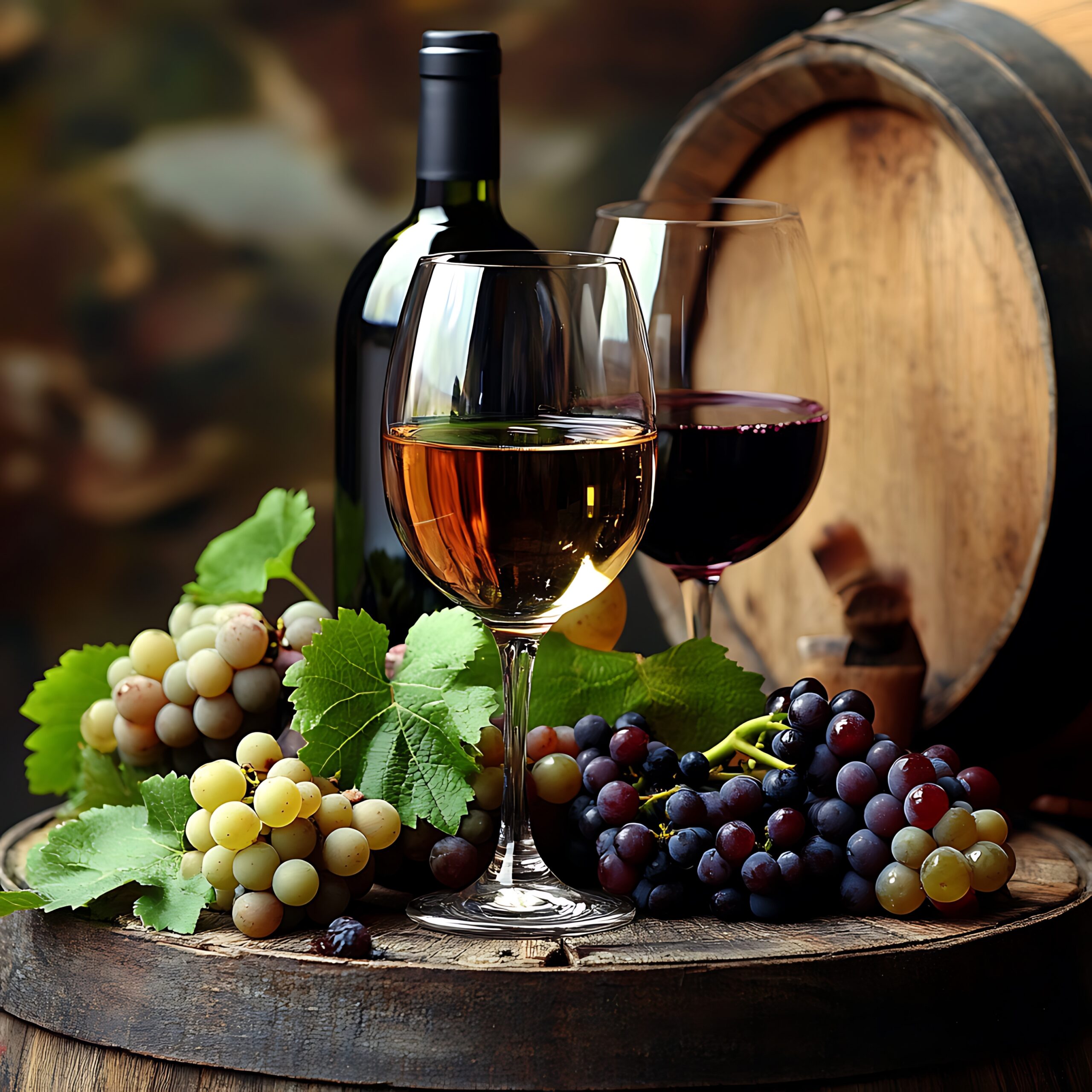
Three thousand years is a long time to keep doing something the same way, and yet the Iberian Peninsula has never really stopped. Phoenician traders planted the first vines along these coasts around 1100 BCE, and every civilization that followed — Romans, Visigoths, Moors, monks, Christian kings, British merchants — added something rather than starting over. Spain and Portugal share that same long root, but they grew in different directions from it: one country built its name on a red grape that travels well and ages slowly, the other built its name on a wine that was fortified specifically so it could survive a sea voyage at all. Both are still on our own table today, exactly where they’ve always belonged.
Spain: One Grape, Many Answers
Tempranillo is the closest thing Spain has to a national grape, and nowhere proves it better than Rioja, strung along the Ebro River in the north, where Atlantic rain and Mediterranean sun meet in the same vineyard. Rioja ages the wine before it ever reaches a shelf — Crianza, Reserva, and Gran Reserva aren’t marketing terms so much as a promise about how long the wine spent in oak and bottle before anyone was allowed to sell it, and the American-oak character that results (vanilla, soft spice, red fruit gone slightly savory) is what most people picture when they picture Spanish red wine at all.
Follow the Duero River instead of the Ebro and the same grape tells a different story. Ribera del Duero grows old-vine Tempranillo — Tinto Fino, locally — through a continental climate of scorching days and cold nights that stresses the vines into producing smaller, more concentrated fruit. The reds that come out the other end are bolder and more structured than Rioja’s, built for aging rather than easy drinking.
Priorat, tucked into the rocky hills of Catalonia, doesn’t grow much Tempranillo at all — it’s Garnacha and Cariñena here, planted on slopes so steep and so poor in nutrients that the old vines can barely produce a handful of clusters each. What little fruit survives concentrates into something almost mineral, dense with blackberry and spice, among the most intense red wine Spain makes.
Not everything from Spain is red. Rías Baixas, on the Atlantic coast of Galicia, grows Albariño in vineyards close enough to the sea that the wine itself picks up a faint salinity — bright, high-acid, built for exactly the seafood this coastline already pulls from the water. And in the south, Jerez does something no other Spanish region does: it fortifies and ages wine in a solera system, fractional blending across barrels of different ages, until Palomino grapes become Sherry — a spectrum running from bone-dry Fino to the dark, ten-years-and-older Sherries we already keep on our own shelf as vinegar’s own wine ancestor.
Portugal: A Wine Built to Survive the Ocean
Port wine exists because of a problem nobody today would think twice about: in the late 1600s, English merchants at war with France needed a new source of wine, and the wine they found in Portugal’s Douro Valley didn’t survive the sea voyage back to England. The fix was almost crude in its simplicity — add grape spirit partway through fermentation, stopping the yeast before it converts all the sugar, which both preserves natural sweetness and raises the alcohol enough to keep the wine stable in a ship’s hold for months. By 1703, the Methuen Treaty had locked in preferential English tariffs for Portuguese wine, and by 1756 the Marquis of Pombal had demarcated the Douro Valley as one of the world’s first legally protected wine regions — decades before most of Europe thought to do the same. Today the Douro’s terraced, slate-soiled hillsides carry UNESCO World Heritage status, and the traditional grapes grown there — Touriga Nacional chief among them, alongside Tinta Roriz, Tinta Barroca, Touriga Franca, and Sousão — still get harvested largely by hand, because the terrain is too steep for much else.
Port isn’t one wine, either. Ruby Port stays youngest and most fruit-forward, all cherry and raspberry, aged only briefly before bottling. Tawny Port ages far longer in barrel, oxidizing slowly until it turns the color its name promises and picks up caramel, dried fruit, and roasted-nut notes no Ruby ever will. Vintage Port — made only in years a producer formally “declares” as exceptional — ages instead in bottle, dense and structured, built to improve for decades. White Port, made from white grapes instead of red, stays crisp and citrus-bright, traditionally served chilled with tonic as an aperitif. And Late Bottled Vintage splits the difference — the richness of a single strong year, made approachable sooner than a true Vintage ever is.
The Bridge We Built Ourselves
Spain and Portugal never needed to raise their voices to be heard, and neither does the wine bridge we’ve built between our own table and the one we grew up around. Austria and Iberia don’t share a border, a language, or much history at all — but they share an instinct for a grape that holds its own against rich food, and that’s enough to build a pairing on.
Zweigelt beside Rioja — Austria’s own soft, cherry-bright red meets Rioja’s gentler, oak-rounded Tempranillo almost as equals; neither wine overpowers the other, and both were built to sit beside roasted or grilled meat without demanding the whole plate’s attention.
Blaufränkisch beside a Vintage or Tawny Port — Blaufränkisch’s peppery spice and firm tannin structure stand up to Port’s density the way few table wines could, echoing the same “structured red meets something rich” logic that already pairs Ribera del Duero with lamb or Priorat with duck confit.
Grüner Veltliner beside Vinho Verde or Albariño — two crisp, mineral, food-first whites from opposite ends of Europe, built around the same idea: bright acidity that exists to serve the meal, not upstage it.
None of these pairings come from an old family recipe the way Manchego-with-Rioja or Serra da Estrela-with-Tawny Port do. We built this one ourselves, on the belief that two traditions raised an ocean and a mountain range apart can still recognize each other in a glass — which, when you taste it side by side, they clearly do.